“`

Free Online Writing Tools for Students
Writing a strong academic paper starts with a clear idea, organized structure, useful evidence, and careful revision. DailyToolSpot’s writing tools can help you move from an assignment prompt to a more organized and polished piece of writing.
Use these tools to develop thesis statements, plan essays, create introductions, summarize information, analyze documents, and format citations.
Whether you are working on a short response, research paper, history essay, or larger academic assignment, these tools can help you organize your work and improve your writing process.
Looking for more academic resources? Explore Study Tools or browse our AP History Study Tools.
Writing & Essay Tools
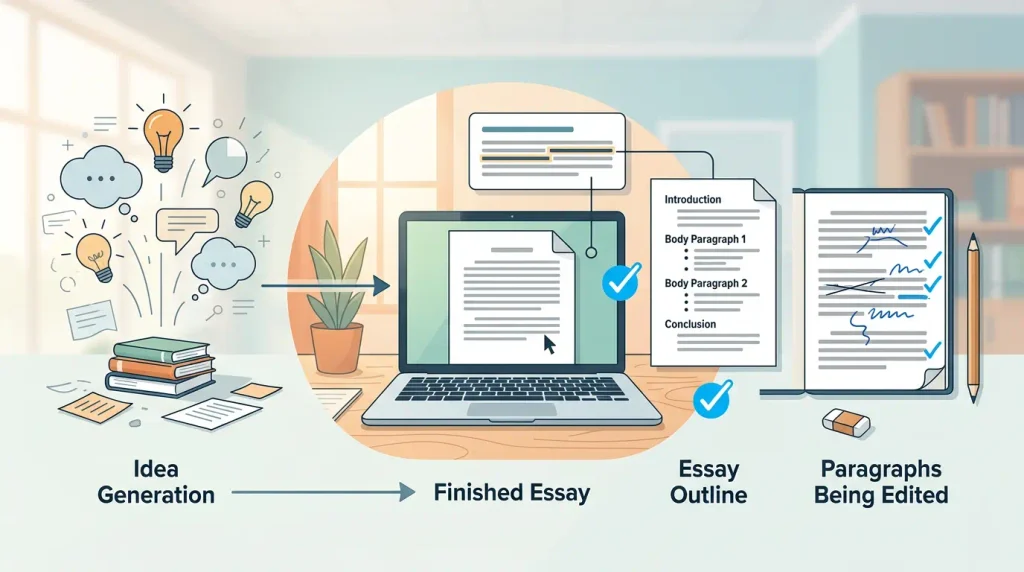
Free Essay Writing Tool
The Free Essay Writing Tool helps you organize and develop ideas for an essay. Use it when you need support getting started, structuring your thoughts, or developing a draft.
Introduction Generator
The Introduction Generator helps you create a starting point for an essay or academic response. It can help you organize the opening of your paper around your topic and main idea.
Essay Hook Generator
The Essay Hook Generator helps you develop possible opening ideas for an essay. Use it when you want to make the beginning of your writing more engaging while staying focused on the assignment.
Thesis Statement Generator & Grader
The Thesis Statement Generator & Grader helps you develop and evaluate thesis statements. A clear thesis can give your essay a focused argument and help guide the rest of your writing.
Thesis & Outline Generator
The Thesis & Outline Generator helps you connect your main argument with an organized essay structure. Use it before drafting when you want to turn your ideas into a clearer outline.
Summary Generator
The Summary Generator helps you organize the main ideas of a passage or source into a concise summary. It can be useful when reviewing reading material or preparing notes for an assignment.
Essay Planning & Analysis Tools
DBQ & LEQ Outline Generator
The DBQ & LEQ Outline Generator helps you organize ideas, evidence, and analysis before writing a document-based or long-essay response.
DBQ Thesis Generator
The DBQ Thesis Generator helps you develop a focused thesis for a document-based essay. Use it to turn your interpretation of the prompt and historical evidence into a clear central argument.
Document Analysis Helper
The Document Analysis Helper helps you examine information from documents and organize observations that may be useful when developing an argument.
LEQ Comparison Tool
The LEQ Comparison Tool helps you compare possible approaches to a long-essay question and organize your ideas before writing.
Citation Tools
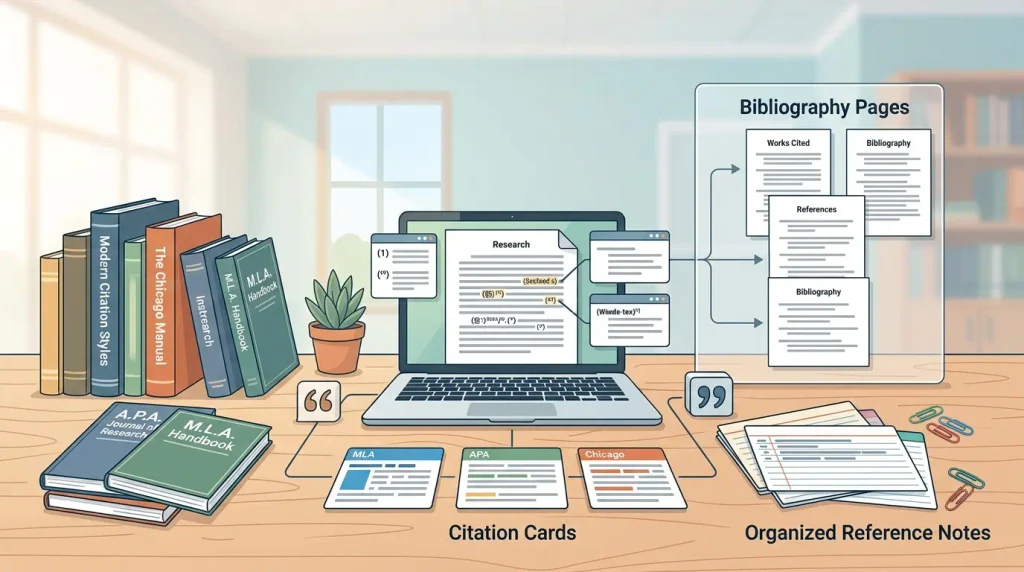
MLA Citation Generator
The MLA Citation Generator helps you create citations and organize source information using MLA-style formatting.
APA Citation Generator
The APA Citation Generator helps you format source information using APA-style conventions. Use it when your assignment requires APA citations.
Chicago Citation Generator
The Chicago Citation Generator helps you organize citations using Chicago-style formatting for assignments that require this citation system.
In-Text Citation Generator
The In-Text Citation Generator helps you create in-text citations and connect them with the sources used in your writing.
Bibliography Organizer & Citation Tool
The Bibliography Organizer & Citation Tool helps you organize source information and keep track of references while working on an assignment.
A Simple Writing Workflow
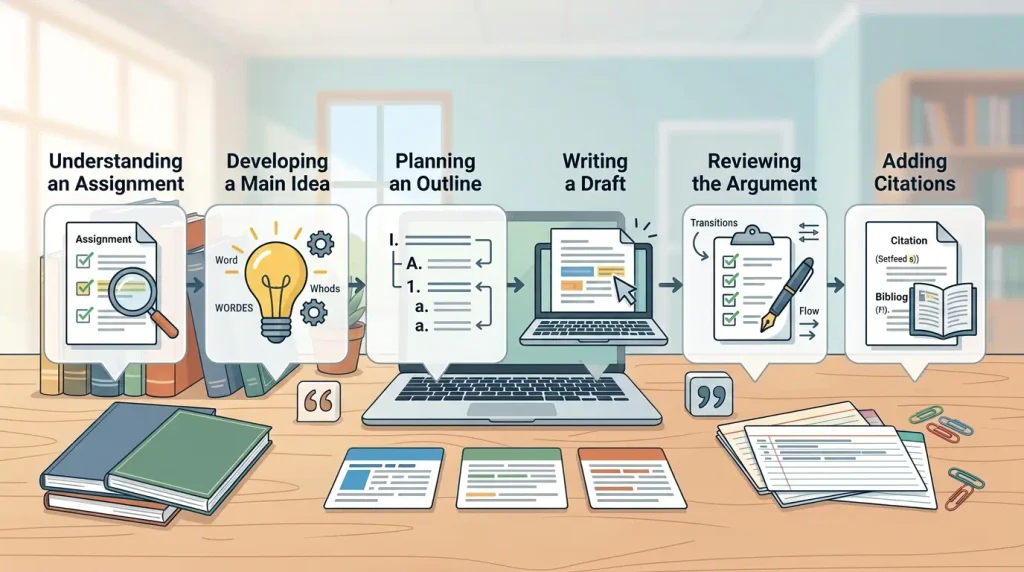
A good writing process does not have to be complicated. You can use DailyToolSpot’s writing tools at different stages of your assignment.
1. Understand the Assignment
Start by identifying the topic, question, required format, length, sources, and other instructions.
2. Develop Your Main Idea
Determine what you want your paper or response to explain, argue, or demonstrate. A focused main idea can make the rest of the writing process easier.
3. Plan Your Structure
Create an outline before drafting. Organize your main points and decide what evidence or supporting information belongs with each point.
4. Write Your Draft
Use your outline to develop your paragraphs and connect your ideas. Focus on getting your main argument and supporting points onto the page before worrying about every small wording issue.
5. Review Your Argument
Read through your draft and check whether your ideas are clear, relevant, and logically connected. Make sure your evidence supports the points you are making.
6. Add Citations
Add citations and references according to the requirements of your assignment. Check that the sources you cite are properly represented in your bibliography or reference list.
How to Choose the Right Writing Tool
| What you need | Recommended tool |
|---|---|
| Help getting started with an essay | Free Essay Writing Tool |
| Create an essay introduction | Introduction Generator |
| Develop an engaging opening | Essay Hook Generator |
| Create or evaluate a thesis | Thesis Statement Generator & Grader |
| Connect a thesis to an essay structure | Thesis & Outline Generator |
| Create a concise summary | Summary Generator |
| Plan a DBQ or LEQ response | DBQ & LEQ Outline Generator |
| Develop a DBQ thesis | DBQ Thesis Generator |
| Examine information from documents | Document Analysis Helper |
| Compare possible LEQ approaches | LEQ Comparison Tool |
| Create an MLA citation | MLA Citation Generator |
| Create an APA citation | APA Citation Generator |
| Create a Chicago citation | Chicago Citation Generator |
| Create an in-text citation | In-Text Citation Generator |
| Organize bibliography information | Bibliography Organizer & Citation Tool |
Writing Tips for Better Academic Work
Start With the Assignment
Before writing, make sure you understand exactly what the assignment is asking you to do. Identify the question, topic, required sources, and any formatting requirements.
Keep Your Main Idea Focused
A focused thesis or central idea can make an essay easier to organize. Avoid trying to cover too many unrelated ideas in the same response.
Use Evidence Purposefully
Evidence should support the point you are making. Instead of simply including information, explain how it connects to your argument or topic.
Organize Before You Draft
A simple outline can help you decide what belongs in each section and reduce unnecessary repetition.
Leave Time for Revision
Your first draft does not have to be perfect. Review your work after drafting and look for unclear sentences, weak connections, missing evidence, and formatting problems.
Follow Assignment Requirements
Different classes and instructors can have different expectations. Always follow the specific instructions provided with your assignment.
Frequently Asked Questions
DailyToolSpot offers tools for essay writing, introductions, thesis development, outlining, summarizing, document analysis, DBQ and LEQ planning, and citation formatting.
If you are not sure where to begin, you can start with the Free Essay Writing Tool, Introduction Generator, or Thesis Statement Generator & Grader, depending on the stage of your assignment.
The DBQ & LEQ Outline Generator, DBQ Thesis Generator, Document Analysis Helper, and LEQ Comparison Tool are designed to help with planning, evidence use, and analysis commonly required for DBQ and LEQ assignments.
Check your assignment guidelines or ask your instructor before choosing a citation style. Requirements can vary by course, school, instructor, and subject.
Yes. Several tools can be useful for history writing, including the DBQ and LEQ planning tools, thesis tools, document analysis tools, and citation tools. You can also explore the AP History Study Tools hub for more history-focused resources.
It depends on the tool. Planning and thesis tools are generally most useful before or during drafting, while summary, citation, and review tools may be useful at different stages of the writing process.
Explore More Tools
Writing is only one part of the academic workflow. Explore more DailyToolSpot resources:
- Study Tools — Browse tools for studying, learning, planning, and academic organization.
- AP History Study Tools — Explore history-focused essay, DBQ, LEQ, scoring, and study resources.
- Productivity Tools — Find tools for organizing tasks, managing time, and improving focus.
- Tool Library — Browse the wider collection of DailyToolSpot tools.
“`