⚖️ LEQ Comparison Tool
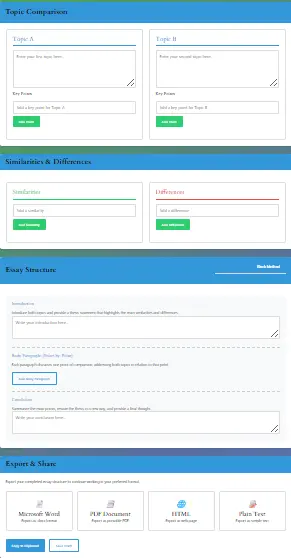
Plan any AP History comparison LEQ in minutes — enter two prompts, map similarities & differences, and build a thesis-driven essay structure with a live preview.
⚖️ LEQ Comparison Workspace
Long Essay Question • Side-by-side comparison organizer & essay planner
🤝 Similarities
⚡ Differences
- Clear thesis that directly addresses the comparison
- At least 2 similarities & 2 differences (or a nuanced argument)
- Specific historical evidence (named events, people, dates)
- Analysis linking evidence to the comparison & thesis
- Synthesis or complexity point (cause/effect, change/continuity)
Fill the fields above — your comparison & essay structure will appear here dynamically.
What the LEQ Comparison Tool Does
This tool helps you organize a comparison LEQ before you write. It gives you a structured workspace to enter two prompts, list similarities and differences, and build a basic essay structure. Everything runs in your browser — nothing is saved to a server.
Why Comparison LEQs Are Hard to Plan
Most students can list facts about two historical subjects. The difficulty is deciding which similarities and differences actually matter — and then turning that decision into a thesis that makes a claim.
The AP History LEQ rubric asks for a defensible thesis, contextualization, specific evidence used to support an argument, and synthesis. In a comparison prompt, the reasoning skill itself — comparison — must structure the essay. Listing similarities and then listing differences is not enough. The rubric asks you to explain why those similarities or differences matter.
That is the specific problem this tool addresses. It gives you a place to separate similarities from differences before you start writing. That separation makes it easier to see what the comparison actually reveals — which is what the thesis needs to state.
How to Use It: Three Steps
- Enter your two prompts. Write the full LEQ prompt for Prompt A and Prompt B in the text areas. Use the actual comparison questions you are working with, not paraphrases.
- List similarities and differences. Aim for at least two specific similarities and two specific differences. “Both had economic problems” is not specific enough to support a thesis. “Both experienced postwar inflation driven by wartime debt” is.
- Draft the thesis and structure. After the similarities and differences are visible side by side, write a thesis that states what the comparison reveals. Then fill in the contextualization, evidence, and synthesis fields with notes, not finished paragraphs. Export when you are done.
The live preview updates as you type. Export the PDF or copy the text before closing the page — your work is not saved automatically.
Turning a Comparison into a Thesis
A comparison thesis should answer the question: What does this comparison show? It should not simply announce that a comparison will occur.
The AP rubric requires a thesis that makes a historically defensible claim and responds to all parts of the question. For a comparison prompt, that means the thesis must identify the significant relationship between the two subjects — not just note that similarities and differences exist.
A practical sequence
- Fill the similarities and differences boxes with specific historical details.
- Read them together. Ask: what pattern emerges? Is one similarity more important than the others? Does a difference explain a larger outcome?
- Write the thesis as a claim about that pattern.
Example: Weak vs. Strong Comparison Thesis
Prompt: Compare the causes of the American Revolution and the French Revolution.
Weak thesis: “Both revolutions had similarities and differences.” — This fails because it does not make a claim. It restates the prompt in different words.
Strong thesis: “Although both revolutions were influenced by Enlightenment ideals and economic grievances, the American Revolution primarily focused on colonial self-government while the French Revolution sought broader social and political transformation.” — This works because it makes a claim about the nature of the difference — the focus of revolutionary change — and that claim can be supported or challenged with evidence.
The tool does not generate this kind of thesis. It gives you the space to arrive at it by organizing what you know first.
Common Mistakes in Comparison LEQs
Based on College Board scoring reports and rubric guidance, these are recurring problems in comparison essays:
- Overgeneralization. Treating Native Americans, “Europeans,” or “workers” as homogeneous groups rather than distinct societies or populations.
- Chronological errors. Placing events in the wrong time period — for example, associating Manifest Destiny with the 1754–1800 period rather than the nineteenth century.
- Listing evidence without connecting it to the thesis. The rubric rewards using evidence to support an argument. Two relevant facts without analysis earn only 1 of 2 evidence points.
- Context as a list of earlier events. Contextualization requires explaining a broader development that helps account for the situation in the prompt. A phrase or a timeline is not enough.
- Synthesis as a passing mention. Synthesis needs multiple sentences connecting the argument to a different period, region, or theme.
The tool’s checklist lists these categories. The tool does not check whether your writing meets them. That check is yours.
Related AP History Tools
Pair this planner with these tools for full LEQ & DBQ prep:
- LEQ Grader — practice scoring against the 6-point AP History rubric
- DBQ Thesis Generator — build a thesis from evidence and documents
- APUSH Evidence Organizer — organize specific evidence before writing
- Thesis Statement Generator & Grader — draft and score your thesis
- APUSH Contextualization Builder — develop strong context paragraphs
- APUSH Score Calculator — project your AP score
For the official rubric language, see College Board AP Central.
Frequently Asked Questions (FAQs)
No. It stores what you type and exports it. The tool is a planning surface — a structured piece of paper you fill in before drafting. You replace every field with your own analysis.
No. The thesis field is a plain text input. A defensible comparison thesis requires you to decide what the comparison shows and state it as a claim.
It can help you organize a comparative element within a DBQ, but it does not analyze documents or manage DBQ-specific tasks like sourcing or document evidence. Use it alongside a DBQ outline tool if you are working with documents.
In your browser session only. Nothing is sent to a server. Export or copy your work before leaving the page — closing the tab loses unsaved work.
This tool helps you plan and organize a comparison before you write. The LEQ Grader scores a completed essay against the rubric. Use this one first, then grade with the LEQ Grader.
No. It does not verify facts or score your work against the rubric. It is a planning organizer — the analysis and accuracy are yours.
Editorial and Tool Information
This page provides a structured planning workspace for AP History Long Essay Questions that require comparison. It is designed to be used before drafting, not as a replacement for writing or rubric-based feedback.
The tool was developed around a simple workflow: enter two prompts → list similarities and differences → build a thesis and structure → review the live preview → export.
The page and tool information are reviewed periodically to improve clarity and reflect changes to the tool. When discussing AP exam requirements or scoring criteria, students should use current official College Board materials as the authoritative source.
Last reviewed: September 2026
Keep Building Your LEQ Skills
Consistent planning is the fastest way to improve LEQ scores — use this workspace to organize your comparison early, then pair it with the grader, thesis generator, and evidence organizer above for focused revision.
When you’re ready, try the LEQ Grader, the DBQ Thesis Generator, or explore the AP History Study Tools hub for more resources.